
treinamento básico
Basic Dog Training: A Practical Guide for Owners
Learn basic dog commands using positive reinforcement, socialisation, and training adapted to the family environment.
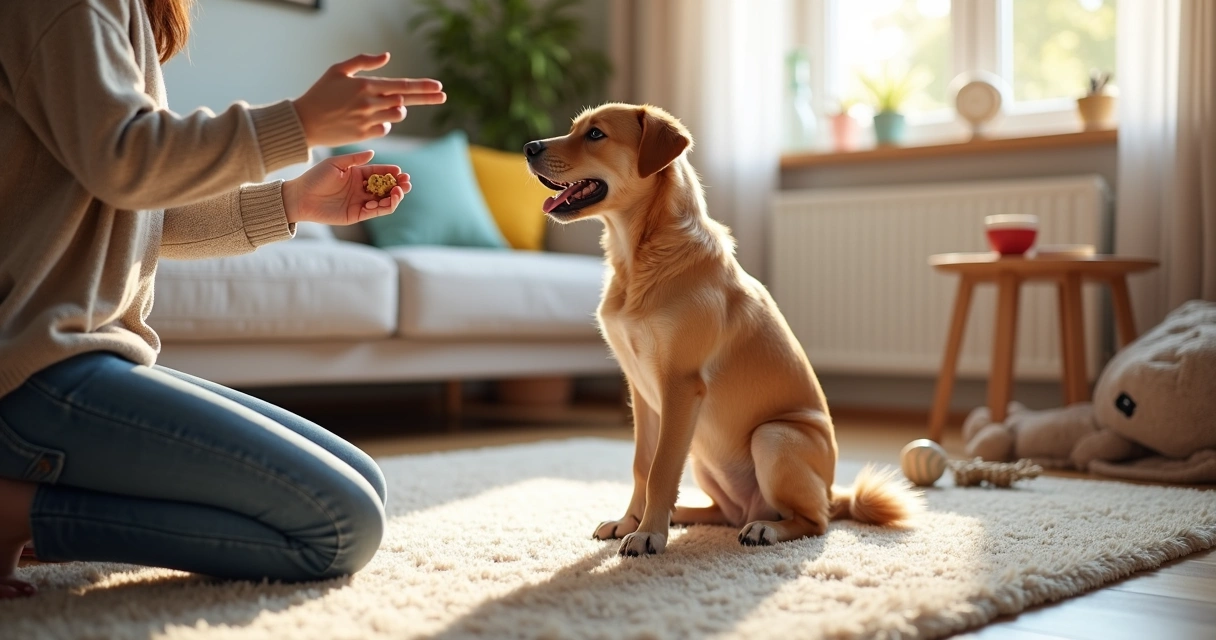
In an increasingly familiar scenario for those who live with dogs, we are faced with the need to educate our companions to ensure not only their well-being but also the harmony of the home. Working daily with the pets we host at Pet Boarding Familiar in Porto, we have noticed that many owners share common doubts. After all, are education and teaching commands the same thing? How can we help our dog adapt easily to a new routine, whether at home or in a family pet-sitting environment?
It is precisely these questions that we propose to address in this practical guide. We will share techniques, methods, and real examples, with simple tips accessible to everyone. We won't be following complicated theories – our goal is to pass on knowledge so that anyone can strengthen the bond with their animal and contribute to balanced and happy behaviour, even during temporary stays in services like ours.
Difference between education and training: what is basic training after all?
We begin by distinguishing two concepts that are often confused: education and training. Although they go hand in hand, they are not exactly the same. At Pet Boarding Familiar in Porto, we notice this difference daily when we receive dogs with varying levels of learning.
Education is the entire process of socialisation, basic rules at home, and respect for the boundaries of humans and other animals. It implies coexistence, understanding, and clear routines. Adestramento, or training, is the process of teaching specific responses to commands, such as sit, lie down, come, or stay. In other words, while educating includes shaping general behaviour and social interactions, training involves precise responses to stimuli and indications given by us, the owners.
Education is coexistence, training is direct communication.
Why is basic training so valuable for the dog and the owner?
We often feel that command exercises are just "tricks". However, training is much more than that. When we teach a dog to respond calmly and predictably, we promote well-being, safety, and, above all, a relationship of trust. Beyond the immediate benefit of avoiding problematic situations, investing in this daily learning is a way to prevent biting, running away, and moments of stress – something we value highly in the family pet boarding environment.
Basic commands are the first step towards healthy coexistence and ensuring the animal feels safe, understood, and respected.
Fundamental principles for successfully teaching your dog
There are several methods available; however, we believe there is a common core that should guide any basic training:
- Positive reinforcement – rewarding good behaviours and ignoring or redirecting undesirable ones.
- Regularity and routine – short, frequent sessions integrated into the dog's normal day.
- Objective commands, simple and always phrased the same way.
- Avoiding physical punishment or shouting.
- Patience and good spirits.
We always emphasize that dogs learn better when they feel comfortable, motivated, and without fear.
The key commands: sit, down, come, and stay
Over the years, we have confirmed that some commands are indispensable for good domestic living. We will address each of them, explaining how to introduce them in a didactic and fun way, whether at home or in a temporary environment like ours.
How to teach the "sit" command
This is perhaps the classic starting point in basic dog training. The goal is to get the dog to sit whenever we ask, whether waiting for a walk, greeting a visitor, or waiting for a meal. Here is a simple process:
- Have small treats that the dog loves on hand.
- Call the dog in a soft voice.
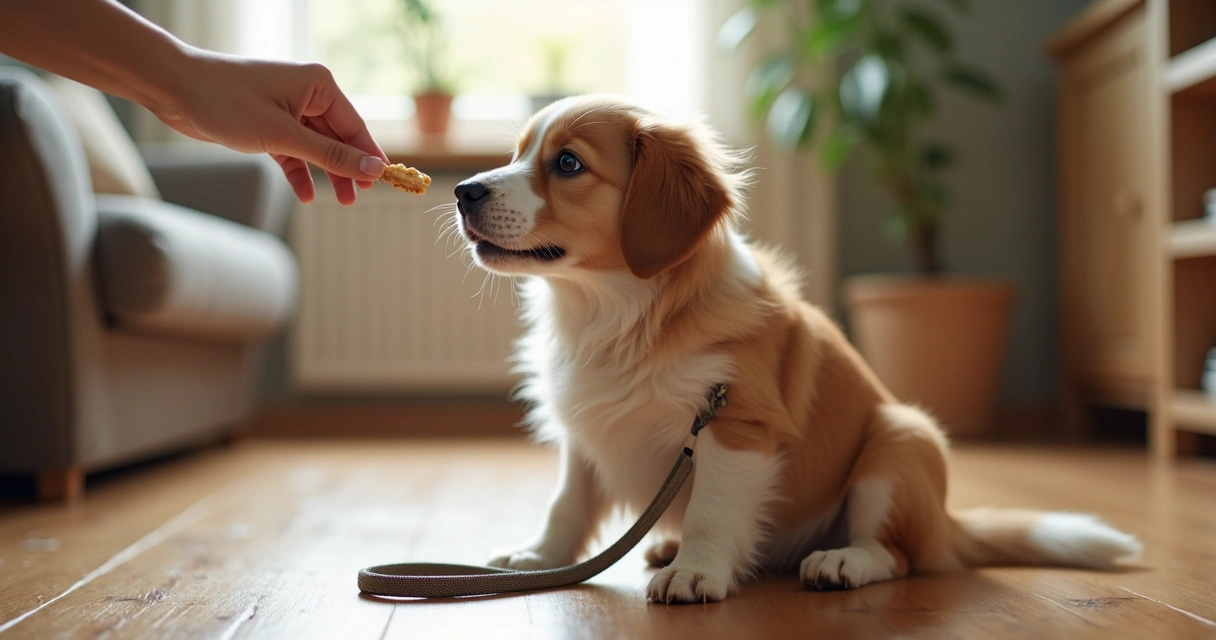
- Hold the snack near the nose and move it slowly upwards, so that the animal follows with its head and ends up sitting naturally.
- As soon as the hindquarters touch the ground, say "Sit", praise, and give the reward.
- Repeat a few times per session.
The "down" command explained step by step
With the animal already familiar with "sit", we move on to "down":
- With the dog sitting, let it smell the snack.
- Lower the snack to the floor, in front of the dog, and then move it gently towards the animal's body – as if drawing a low "L" on the ground.
- As soon as the animal lowers its body, we say "Down", praise, and reward.
- Maintain consistency with short sessions so the dog doesn't get bored.
Teaching the dog to come when called
The "come" or "here" is one of the most useful commands, especially during walks in areas with distractions or in the garden. We practice this exercise repeatedly at Pet Boarding Familiar in Porto, often even in small groups to stimulate healthy socialisation:
- In a controlled environment, show the dog a treat or toy.
- Call by name followed by the command (e.g., "Bobby, here!"), using a motivated voice and associating wide gestures (kneeling, opening arms).
- Upon approach, praise effusively and give the reward.
- Repeat at increasing distances, always in a positive tone.
How to introduce the "stay" command
This command requires greater self-control from the animal, so we recommend working gradually and with supervision:
- With the dog sitting, say "Stay" and take half a step back.
- If it remains still, return immediately, praise, and offer the snack.
- Progress slowly, increasing time and distance, but always rewarding heavily when it gets it right.
- If the dog gets up, go back to the beginning without punishment, restarting at an easier step.
Training must adapt to the animal's pace, never forcing beyond what it can give.
Tools and techniques for positive reinforcement
When we talk about positive training, we always talk about reward and motivation. Some dogs prefer snacks, others toys, or even cuddles and praise. It is up to the owner to understand what truly excites their dog. Among the most used techniques, we highlight:
- Use of a clicker: A small device that makes a "click" sound, marking precisely the moment of correct behaviour. After the click, we always give a reward.
- Small treats: They should be easy to eat, not fill the dog up too much, and preferably be exclusive to training sessions.
- Special toys: Reserved only for when the dog gets the commands right, thus strengthening the positive association.
- Verbal praise and affection: For some dogs, especially sensitive ones, these are more effective than any snack.
The best rewards are those that make the dog happy without creating dependencies.
The ideal routine: short and consistent sessions
In a home full of stimuli, like our Pet Boarding Familiar in Porto, we have realised that the main trick is to create small routines fitted into the dogs' normal schedules. We advocate sessions of three to five minutes, several times a day, in diverse environments (living room, garden, kitchen). In this way, the animal associates training with positive moments of its day, such as before a meal or after a walk.
Letting the dog "hop" between exercises, alternating commands and increasing challenges, maintains interest and prevents mental fatigue.
Promoting socialisation and well-being in a family environment
A large part of educational success is related to socialisation – that is, exposing dogs, gradually and safely, to different people, environments, sounds, and other animals. In our family accommodation in environments adapted to pets, we dedicate time to ensuring that interactions between dogs and humans are positive, supervised, and controlled.
- Organise meetings in small groups of dogs.
- Introduce the animal to different sounds, textures, and everyday objects.
- Allow free access to various spaces, reinforcing limits and basic rules.
- Avoid "forcing" new situations if the dog shows fear or discomfort – always respect the animal's time.
Socialisation builds confident and respectful dogs.
How to correct behaviours without punishment?
We do not believe in shouting, lead yanking, or any technique based on fear or pain. The results are always uncertain and often damage the bond between owner and animal. Instead, we bet on:
- Redirecting unwanted behaviours to positive exercises.
- Ignoring inappropriate behaviours (as long as they don't involve risk).
- Modifying the environment to avoid problematic situations (storing food the dog usually steals, for example).
- Actively rewarding all signs of desired behaviour.
Negative methods can scare or block the dog's learning.
Personalisation of training according to each personality
As we said at the beginning: each dog has its own time, its own tastes, and, of course, its own quirks. What works perfectly with one might leave another completely indifferent. Some love active games, others prefer quiet sessions with lots of praise. The secret lies in observing the dog, adjusting approaches, and never comparing results.
Successful training is that which is tailored to the animal, respecting boundaries and celebrating small victories every day.
The owner's role: creating a bond, safety, and communication
The owner is the dog's link of trust. It is clear to us, in the routine of our gallery of experiences, that the best results arise when the owner is active, participates in training with serenity and good spirits. Laughing and playing are part of the process, as is celebrating when the animal responds well. Training is a moment of connection, not of demand.
More than teaching tricks, one teaches trust and understanding.
Training in family pet boarding contexts
Many owners fear that their dog will return home with bad habits after a stay away, but we guarantee that the family environment, free of cages, allows for the continuity of the animal's routines, including training sessions. We adapt methods and schedules to each guest, following the owners' instructions and promoting consistent positive reinforcement practices. By checking our calendar and availability, it is possible to organise stays with guaranteed continuity of learning and well-being.
Practical tips for training dogs staying in family pet boarding
Let's then gather some simple guidelines, adapted to the reality of our guests and owners concerned about the continuity of training during absences:
- Provide detailed information about habits, preferences, and commands the dog already knows.
- Bring blankets, toys, and favourite snacks to the pet boarding, creating a link with the home environment.
- Schedule short video calls or share photos/videos for the dog to hear the owner's voice while staying.
- Request the team to maintain learning routines and the commands normally used.
- Promote positive experiences with other dogs and people, reinforcing desired behaviours and ignoring or redirecting unwanted ones.
Moments of celebration: small achievements count for a lot
Many owners are surprised to see how quickly certain behaviours change when training is done in a playful way. The animal feels part of the family, learns new routines, socialises without stress, and returns home more confident. In the end, we love sharing these progress markers through the messages, photos, and videos we send daily to owners during their stays.
If you are looking for a genuinely family-oriented service, with close monitoring of behavioural development, we invite you to get to know us better. Check our contacts and discover how we can help your dog grow more balanced, happy, and secure – with positive training integrated into the daily routine of each guest.
Conclusion
Basic dog training is, above all, a commitment to respect, communication, and affection. Starting from small routines, short sessions, and positive methods, we build more harmonious relationships, both at home and in a welcoming family pet boarding environment. The secret lies in consistency, patience, and the ability to adapt practices to each animal's profile. We invite you to apply these tips daily and count on us to accompany your best friend's journey of growth and learning.
If you want to know more about Pet Boarding Familiar in Porto or schedule a visit, take a look at the information on our website and discover how we can care for your dog with all the dedication they deserve.
Frequently Asked Questions
What is basic dog training?
Basic training consists of a set of simple exercises aimed at teaching the dog fundamental commands such as sit, down, come, and stay. Beyond these, training develops self-control, communication, and strengthens the bond between owner and animal, facilitating family coexistence.
How do I start educating my dog?
The starting point is to create a consistent routine, use positive reinforcement (rewards, toys, or praise), and adopt short daily sessions in a calm environment. Choose simple command words and practice whenever possible, making the moments of learning fun and free from excessive pressure.
How long does it take to teach simple commands?
It depends on each animal's pace, the frequency of sessions, and the motivation involved. Some dogs learn to sit in a few minutes, while others may take days or weeks to solidify commands like "stay" or "come".
Is it worth hiring a professional trainer?
For those who find it difficult or wish to resolve more complex behavioural issues, the guidance of a professional can be very beneficial. However, for basic commands, most owners can achieve great results by following simple guidelines and applying them consistently at home or with the support of family services like ours.
What are the most important commands to teach?
The commands sit, down, come, and stay are considered the foundation for harmonious coexistence. From these, it is possible to evolve to more advanced ones, always respecting the dog's time and personality.
Automatic translation of the Portuguese original.