
Cuidados Animais
10 signs your pet suffers from separation anxiety
Discover the signs of separation anxiety in your pet and learn how to help reduce stress and destructive behaviour.
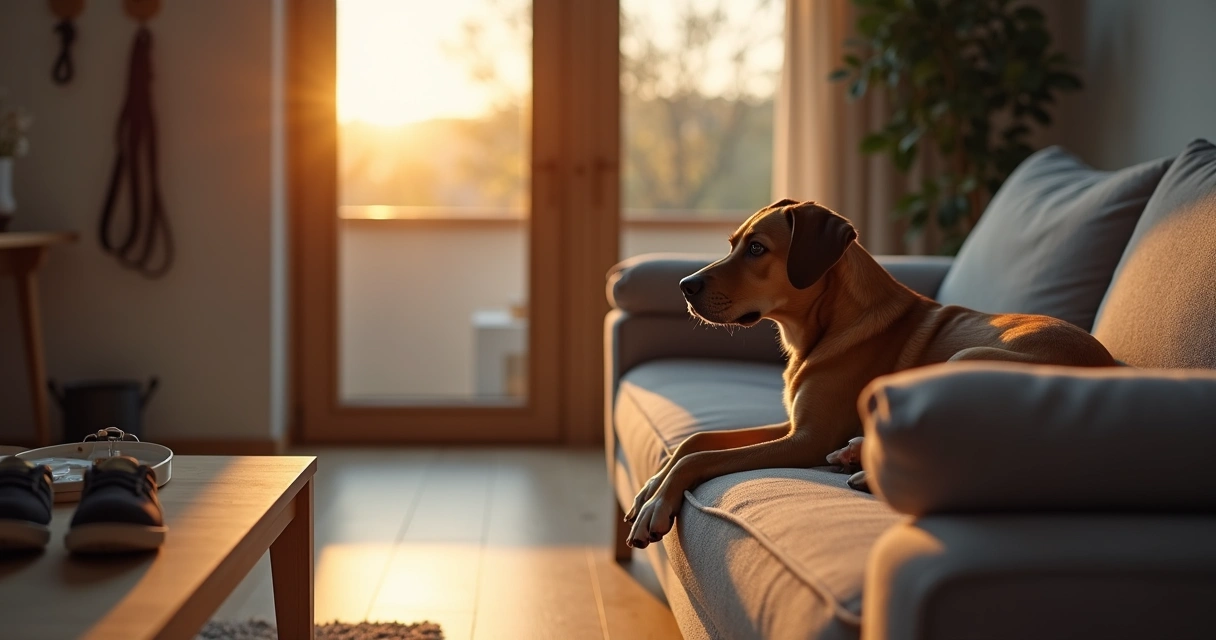
Has it ever happened to you that you arrive home and find the sofa destroyed, doors scratched or even objects smashed and you don't understand why? Do you hear your dog barking incessantly after you leave the house, making you feel guilty with every step? So-called separation anxiety is much more than a tantrum or being naughty. It is a true state of panic, and it can affect not only the animal but also the relationship between pet and owner in a harsh way. In this article, I will guide you through the 10 most common signs that, in my experience, help identify this behavioural challenge. And throughout the text, I will share small stories and useful daily tips from Pet Boarding Familiar in Porto, where I frequently deal with such cases.
What exactly is this absence stress?
Separation anxiety arises when our animals cannot cope with the absence of their owners, feeling insecure, anxious and often at risk, even if they are objectively protected. The origin may lie in the animal's past, in recent changes or in very intense bonds – so-called hyper-attachment. But be careful: it is not about revenge or ill will. No animal destroys the house "on purpose". What moves it is the intense fear of being alone.
This fear is not resolved with punishment, but rather with understanding and adaptation.
1. Excessive vocalisation as soon as you leave the house
One of the most evident signs of anxiety is the immediate onset of intense vocalisations – howling, barking or whining – as soon as you turn your back. I have followed owners who recorded audio and were surprised by the intensity of the noise just minutes after leaving. If neighbours complain about frequent noise when you are not at home, take this alert seriously.
2. Destructive behaviour localised at doors and windows
Dogs (or even cats) who feel trapped by fear look for ways to "reach you". Chewing or scratching doors, frames and windows, especially near the exit, is common. This destruction is an escape attempt driven by desperation, and not simple stubbornness or boredom.
3. Toiling in inappropriate places
Even an animal that has not soiled inside the house for a long time may, in an episode of abandonment syndrome, start urinating or defecating in inappropriate places. Generally, this occurs in the first few minutes after the owner leaves. And I guarantee: it is not out of anger. It is due to lack of control caused by anxiety.
4. Intense salivation and excessive drooling
I have seen dogs leave real puddles of drool in the places where they wait for their owner's return. When anxiety is very strong, the animal can salivate so much that the floor gets wet. This is a very visible physical sign, often underestimated.
5. Pacing back and forth compulsively
Anxious dogs tend to walk repeatedly over the same path, in a kind of automatic patrol near doors, windows or spaces where they say goodbye to the owner. This repetitive pattern is an attempt at self-regulation, not very effective, but involuntary. I saw this behaviour dissipate quickly in welcoming and family-like environments, such as in our spaces at Pet Boarding Familiar in Porto, when the animal realises it is not alone and finds reliable company.
6. Following the owner all over the house
Even before you leave, is your dog already starting to feel nervous? If you have constant company and the animal doesn't leave your side for a second, even in the shower or on the way to the door, it could be a sign of hyper-attachment. This behaviour tends to worsen and frequently leads to panic when the owner effectively disappears from sight.
7. Refusal to eat or loss of appetite when alone
Many animals simply do not eat if they are alone or eat only after the owner returns. I have witnessed cases where the food bowl remains untouched for hours, even when the animal usually cannot resist treats. This is a subtle but important symptom.
8. Self-harm: licking or biting paws and body
Anxiety can reach the extreme of leading the animal to bite its own paws, lick itself non-stop or pull out fur. These self-inflicted injuries are responses to intense stress and can degenerate into serious dermatological problems.
9. Trying to escape or forcing doors and windows
At the height of panic, many animals try to jump through open windows or force doors, risking serious accidents such as falls, wounds and even escaping into the street. This is dangerous behaviour, always motivated by a deep desire to find the owner again, never by disobedience.
10. Hypervigilance and anticipatory stress
Finally, there is that permanent alertness that precedes all your departures. Even before you show your keys or put on your shoes, the animal already trembles, pants intensely, jumps, cries or shows physical signs of stress. This anticipatory stress can quickly evolve into a state of alarm, with even more severe symptoms over the hours.
Asking for help is care, not weakness
I live daily with owners who feel frustrated, guilty or even angry with these behaviours. It is fundamental to understand that the animal reproduces symptoms of a real emotional disorder, it is not having a tantrum, nor is it seeking punishment or rewards. The goal is to relieve its suffering and protect the well-being of the whole family.
How to act when faced with signs of severe anxiety?
I leave you with some guidelines based on the experience of Pet Boarding Familiar in Porto and what I have shared with families in identical situations:
- Avoid physical or verbal punishment – it will only worsen the fear and isolate the animal even more.
- Practice short departures and train gradual separations.
- Enrich the environment with toys, scent games, soft music and familiar elements.
- Maintain predictable routines that convey security to the animal.
- Seek the guidance of a trainer or veterinarian specialising in animal behaviour when symptoms persist or worsen.
In addition, opting for family pet boarding services, like those we offer, can, at critical moments, prevent worsening of your pet's physical and emotional health. Being in a family environment, without cages, with frequent contact and lots of attention, makes a difference. And if you want to delve deeper into topics related to animal welfare or learn more about animal socialisation, explore our dedicated articles.
Conclusion
Never think that your animal causes damage or becomes anxious because it wants to "take revenge" or challenge you. In most cases, manifestations of separation anxiety are silent cries for help. The best way forward is to look at these signs with empathy and seek solutions that balance the owner's routine with the animal's comfort and tranquillity. If you feel the situation is beyond what you can handle alone, Pet Boarding Familiar in Porto is always ready to support you and find a tailored response for your pet. Take the first step, visit us and find out what you can improve in your animal's daily life! To deepen your knowledge about specific care, I also recommend the article on care in stressful situations or consulting our animal care section.
Frequently asked questions
What is separation anxiety?
Separation anxiety is an emotional disorder in which the animal panics or feels strong distress when away from its owner. It can manifest through various behaviours, from destruction to intense vocalisation, and results from the fear of being alone or being abandoned.
What are the most common symptoms in animals?
The main symptoms include excessive vocalisation, destruction of objects near the door, toiling in the wrong place, heavy salivation, following the owner around the house, not eating when alone, escape attempts and even self-mutilation. These signs should be taken seriously and investigated.
How can I help my anxious animal?
Start by not punishing the animal. Increase its security with environmental enrichment, toys and stable routines. Train short departures, so the animal learns that you always come back. In severe situations, seek professional support. Family pet sitting services like ours can also significantly reduce stress.
When should I see a vet?
You should see a behavioural veterinarian if symptoms are intense, persist for weeks or put the animal's physical health at risk (self-harm, refusal to eat, escape). The professional can suggest strategies, training and even eventual medication if necessary.
Is there a cure for separation anxiety?
In many cases, it is possible to achieve significant improvement through training, environment adaptation and correct monitoring. Recovery is normally gradual and requires patience from the owner. Each case is unique, but with proper support, the animal can learn to feel safer even when temporarily alone.
Automatic translation of the Portuguese original.