
Cuidados Animais
What to pack in your pet's bag for their stay
Complete checklist for your pet's bag: food, health, comfort and walking items, ensuring a safe adaptation.
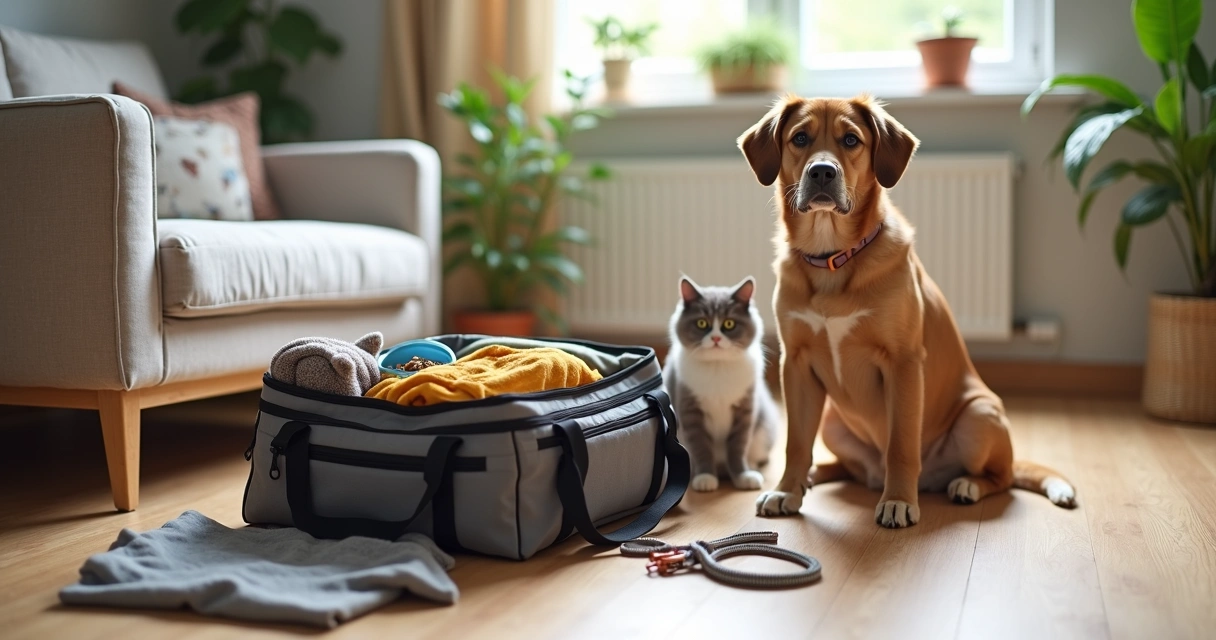
When I entrust my dog or cat to someone, I always make sure to ensure they take everything they need to feel good. Organising an animal's luggage, whether for a short or extended stay, is something that requires attention to detail and affection. After all, every pet has their own preferences and, above all, the unknown can cause anxiety. Therefore, I have created this guide organised in the first person, practical and designed to help prepare your animal to feel as good as at home at Pet Boarding Familiar no Porto.
Good preparation makes all the difference in the animal's adaptation.
Organised checklist: how to think about your pet's comfort and needs
Before putting everything in the pet's bag, I like to divide the items into four main categories: Food, Health, Comfort and Walking. Knowing the "why" behind each choice makes all the difference in adaptation and well-being during the stay.
Feeding: maintaining flavour and routine
When it comes to food, I know well the importance of a feeding routine for animals. Abrupt changes can cause gastrointestinal discomfort and even food refusal. Therefore, my advice is:
- Usual food or kibble in sufficient quantity (plus 2-3 extra days): I always take more to prevent any delays or unforeseen events.
- Treats if they are part of the feeding habit.
- Functional rewards (dental sticks or natural biscuits, if the animal is used to them).
- Familiar bowls: Home feeders and drinkers, with the usual scent, can help with food acceptance and, of course, the feeling of security.
Taking the usual containers makes the animal smell the home and accept the food better.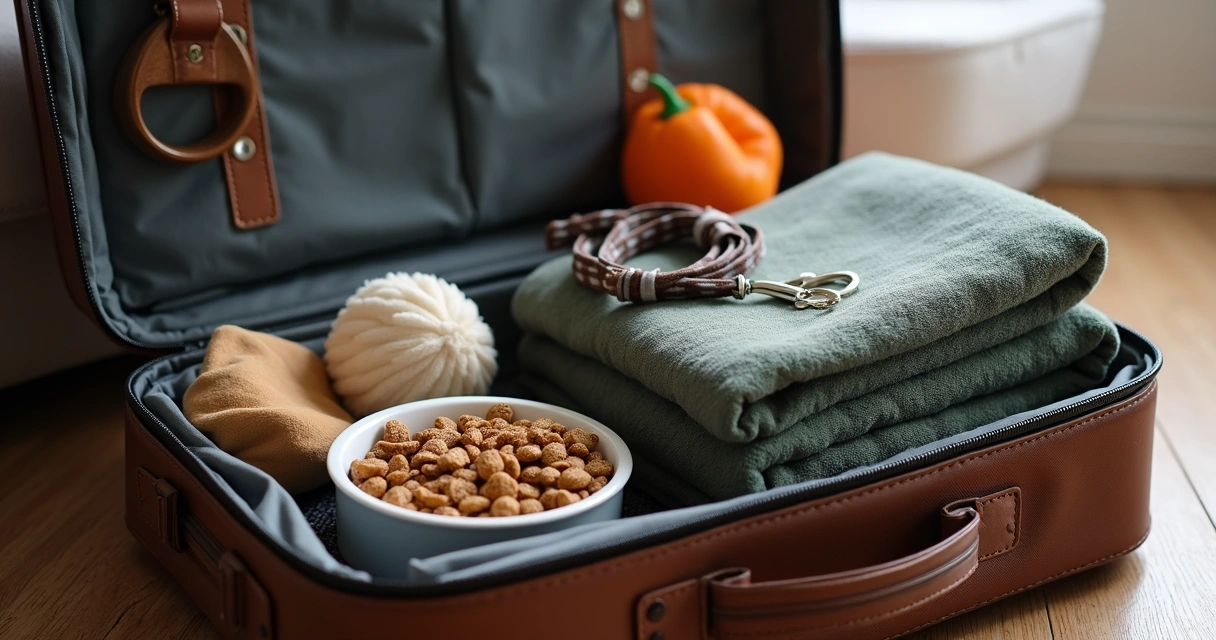 Health: ensuring well-being and safety
Healthcare is indispensable. During trips and stays, I like to prevent any unpleasant situations by ensuring:
- Regular medication and written instructions, clearly identified and in a transparent box.
- Up-to-date flea and deworming treatments (I always check the date of the last treatment).
- Vaccination record: Mandatory document for most places, containing all vaccines and deworming records.
- Information about allergies and intolerances, if they exist.
Once, during a stay, I remembered to also include the contact of the usual vet – it was useful for clarifying a last-minute question from the carer. I recommend it!
Comfort: familiar smells and peaceful rest
Emotional comfort carries a lot of weight in the first few days. In my case, I noticed that a simple object from home made all the difference:
- Bed or blanket with the smell of home: The animal recognises it immediately and relaxes much faster.
- Favourite toys (not in excess, just the favourites).
- Tutor's old clothes (a t-shirt or item with your scent), fundamental for adaptation hurdles, especially in cases of anxiety.
Few details are as effective in providing adaptation in a hotel and a sense of security as these items. Furthermore, familiar blankets and beds help the animal identify a space of their own in a new environment.
The tutor's scent helps the animal to calm down in the new environment.
Walking: all ready to go out safely
Dogs, above all, have their walking routine and sometimes even their own favourite accessories. In my pet boarding checklist, I never miss:
- Harness or collar for daily use (well-fitted and identified, ideally with a tag and tutor contact).
- Sturdy and clean lead.
- Poo bags.
- Outdoor toy (durable soft toys or tough balls, if the animal likes to play during the walk).
These items ensure that the experience away from home is as similar as possible to what the animal is used to, reducing the impact on their routine.
Extra organisation: list with the animal's routine
Over time, I've learned that the most valuable thing isn't just what goes in the pet's luggage, but everything we share with the carer. Therefore, I usually write an A4 sheet with essential information about:
- Meal and walk times
- Exact amounts of food at each meal
- Habits and quirks (if they like to sleep alone or near humans, fear of thunder, where they like to be stroked)
- Sleep patterns and details about preferred relaxing sounds or music
- Tips to calm the animal in situations of anxiety
At the Pet Boarding Familiar no Porto project, we frequently receive detailed lists, and I am impressed by how this sharing facilitates not only adaptation in the hotel, but also daily communication with the tutors! I recommend including even preferences about toys or the type of walk, as small details make a difference.
Labelling: identification and safety of objects
A tip that can avoid confusion (and has already saved me a lot of trouble): identify, even with simple labels, all the animal's objects. From bowls to blankets, to toys, everything should have the pet's name and, if possible, the tutor's contact.
Benefits of planning ahead
When I follow this process in advance, I notice a calmer environment both for me and for the animal, and for the carers at Pet Boarding Familiar no Porto, of course. The person receiving the animal feels more secure and prepared, and the pet adapts with less stress.
Sharing detailed information is a sign of affection
It's true, I usually feel some nervousness whenever I leave my furry friend away from home. So, I always send a scanned list to the responsible carer for quick queries. I also write this list by hand and place it inside the bag with the rest of the material, you never know when the internet might fail.
Conclusion
Essentially, preparing the animal's luggage is a gesture of care and responsibility. Good organisation ensures that, during the stay at Pet Boarding Familiar no Porto, your furry friend maintains their routine, feels safer and happier. Each item has its purpose, from the extra food to the plush octopus, to a simple t-shirt with the tutor's scent. This way, you can travel or work with peace of mind and, above all, your pet will feel that they have brought a little bit of home with them.
If you are looking for more tips or want to know how our care works, discover our content on animal care, comfortable travel and animal well-being. And if you want close monitoring, get to know a bit of our daily routine in pet boarding or discover experiences already lived in tutor testimonials. Talk to us, we will be delighted to welcome your four-legged friend and help with their adaptation!
Frequently asked questions
What should I put in my pet's bag?
For a peaceful stay, I recommend sending enough food (and some extra), familiar bowls, medication (if applicable), vaccination record, blanket or bed with the smell of home, favourite toys, harness, identified collar and poo bags. Add an object with your scent, like an old t-shirt, and a list of the animal's routines and quirks.
How to organise the animal's bag for a stay?
Divide items by categories: feeding, health, comfort and walking. Use identified bags for each category and use boxes or pouches for small objects. Place the routine list clearly visible at the top of the luggage.
Which items are essential in the pet's luggage?
The most indispensable items are: usual food, vaccination record, familiar containers, medication (if used), blanket with the smell of home, favourite toy and a well-identified harness or collar. This ensures that the animal's basic needs, health and emotional comfort are covered.
What cannot be missing from the dog's bag?
In my opinion, the usual food, vaccination record, an object with the tutor's scent, the animal's bed or blanket, walking accessories (collar, harness and lead) and, of course, poo bags should never be missing. The luggage should reflect the animal's routine at home.
Do I need to identify all the animal's objects?
Yes, you should identify all the objects you send to avoid losses or mix-ups. A simple label with the dog's name and, if possible, the tutor's contact is enough. This practice makes the carer's routine easier and offers greater security to your furry friend.
Automatic translation of the Portuguese original.